
Lake Mead Nears Record-Low Levels as Drought and Shrinking Snowpack Strain the Colorado River Basin
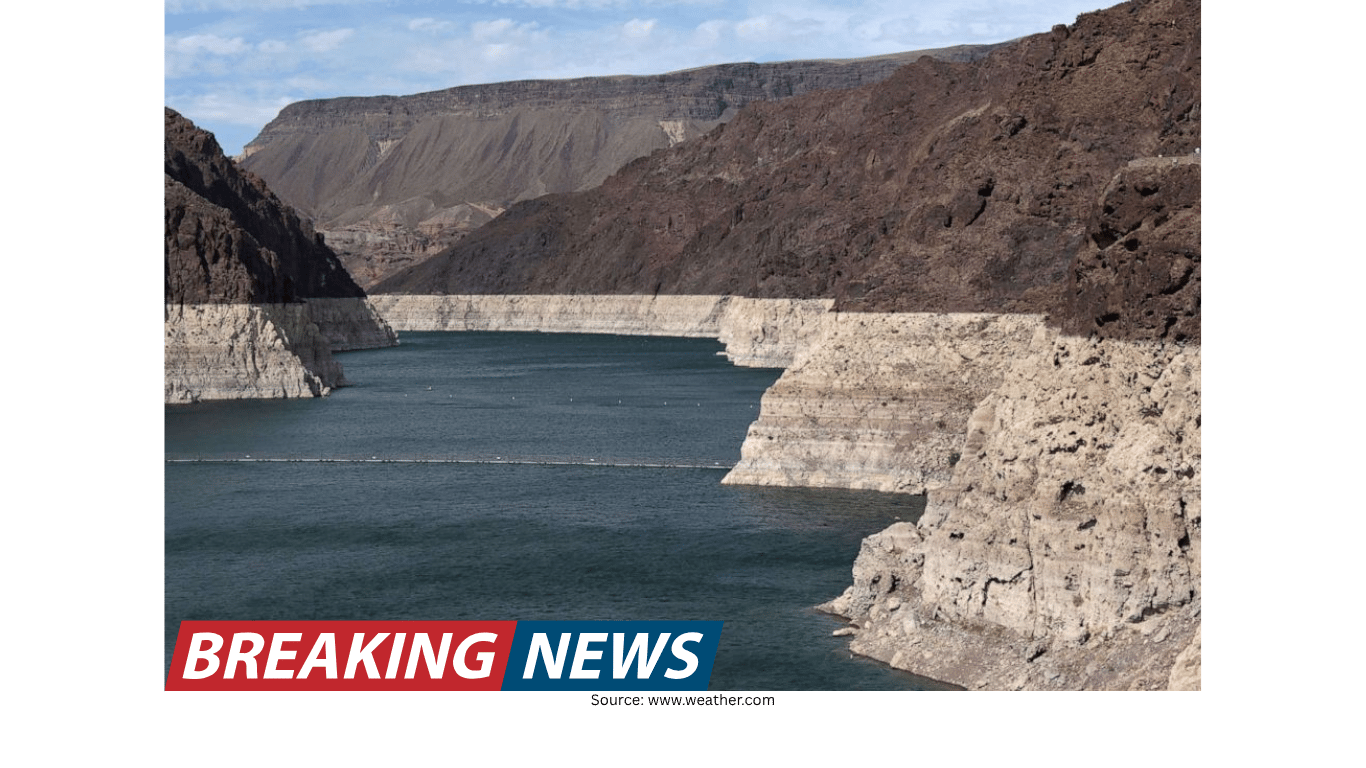
A reservoir under pressure
Lake Mead sits on the Nevada–Arizona border, formed by the construction of the Hoover Dam on the Colorado River in 1935. It is the country’s largest reservoir and a crucial supplier of drinking water to millions of people across the West. Today, it is once again drawing attention for a troubling reason: the lake is nearing a historic record low.
The reservoir reached its all-time low water level in 2022. Now, it is about 20 feet away from breaking that record, with the surface elevation roughly 175 feet below maximum capacity. The decline is not only a matter of long-term trend lines—levels are still falling in the near term, too. Since March 1, the lake has dropped by 8 inches.
Those numbers are more than statistics. They reflect a water system under strain, shaped by exceptionally dry conditions since the 2000s and influenced by ongoing climate change, reduced snowpack, and low runoff conditions, according to the National Park Service. Together, these factors are altering how much water flows into the Colorado River Basin and, ultimately, into Lake Mead.
How low is “historic”?
Since Lake Mead’s formation, the U.S. Bureau of Reclamation has maintained detailed records of both water storage and water level. Storage is measured in acre-feet (a unit of volume), while water level is measured in feet of elevation. Those records show that since 2000, the reservoir has trended downward in both measures—an extended decline that has set the stage for today’s conditions.
To understand the scale of the drop, it helps to look at the historical benchmarks contained in those records:
- The last year Lake Mead’s water volume reached 15 million acre-feet was 2006.
- The last time it reached 20 million acre-feet was 2001.
- In the 1940s, it reached nearly 30 million acre-feet.
- At present, it stands at about 8.3 million acre-feet.
The water level record tells a similarly stark story. Since July 2000, the lake has not risen above 1,200 feet—a level that had been its approximate peak in the decades prior. Right now, the lake sits at about 1,058 feet. That is the lowest since 2022, when it hit 1,041 feet.
Before the 2022 low, the only records lower were in the 1930s during the Dust Bowl era, a period synonymous with historic drought. The comparison is not comforting, and it underscores how unusual the current moment is in the context of the lake’s recorded history.
Capacity concerns and a downward trajectory
Beyond the headline elevations, capacity provides another way to visualize what is happening. Bronson Mack, an outreach manager with the Southern Nevada Water Authority, said the lake is sitting at just under 35% capacity, and he warned it could drop another 16 feet or more before the end of the year.
While reservoirs naturally rise and fall with seasons and precipitation patterns, the broader record indicates that Lake Mead’s declines are not simply short-term swings. The data maintained by the Bureau of Reclamation show a sustained downward trend since 2000 in both storage volume and elevation. That long slide matters because it reduces the buffer the system has to absorb a bad year—especially a year when snowpack and runoff do not deliver the water that planners and communities depend on.
Why snowpack matters to Lake Mead
Jason Gerlich, a regional drought early warning system coordinator at NOAA’s National Integrated Drought Information System, has emphasized the role of snow in maintaining water levels across the Colorado River Basin. The basin feeds into Lake Mead and also Lake Powell, meaning the dynamics affecting snow and meltwater have consequences across multiple major reservoirs.
Snow is a crucial component because of how it functions over time. Snow accumulates at higher elevations and then melts gradually over warmer seasons, providing a more consistent supply of water than a single heavy rainfall event. This slow release helps sustain rivers and reservoirs beyond the winter months.
One way experts describe the water content in snow is through a measure called snow water equivalent. Not all snow contains the same amount of liquid water: light, fluffy snow holds less water than thick, heavy snow. That difference matters when forecasting how much runoff will arrive later in the season.
Gerlich described a key shift that has cascading impacts on water availability in the West: more rain and less snow during winter months. As he put it, the region relies on snowpack as its largest non-man-made reservoir. When precipitation arrives as rain rather than snow, it changes the timing and reliability of water supply—often reducing the slow, steady melt that reservoirs and river systems have historically depended upon.
An unusually extreme year
This year’s conditions stand out even against recent dry trends. Gerlich said that in some places there was less than 50% of the snow than usual, and that the snowpack peaked 30 to 40 days earlier than normal. He also described a warming that arrived earlier in the year, and more rapidly and suddenly than is typical.
The timing is critical. Periods that would normally be devoted to accumulating snow have instead seen melting. Gerlich noted that this shift is impactful because it reduces the amount of snow available to melt later, when it is needed to sustain flows into the Colorado River system.
In his assessment, the pattern signals a “dire water supply situation” for much of the western United States. The result is visible at water bodies across the region, including Lake Mead National Recreation Area, where receding shorelines and lower levels reflect the broader hydrologic stress in the basin.
Lake Mead’s role beyond water storage
Lake Mead is not only a reservoir in a technical sense; it is also a centerpiece of a major recreation area. Lake Mead National Recreation Area is America’s first and largest national recreation area, and it supports a range of community and regional benefits. The area provides power, water, tourism, and recreational activities, and it hosts approximately 8 million visitors annually. It contributes $374 million to the regional economy and supports about 4,000 jobs.
For visitors, the lake is a hub for water-based recreation, including boating, swimming, sailing, kayaking, and fishing. These activities depend on access to water and functional infrastructure. As levels decline, the lake’s value as a community asset becomes harder to sustain in the same way, and the risks extend beyond recreation to the broader economic and social benefits tied to visitation.
In practical terms, lower water can mean increasing challenges for the activities people associate with the lake. It also adds urgency to discussions about how the Colorado River system is managed, because the lake’s condition reflects the balance—or imbalance—between supply and demand across a vast region.
Calls for new guidelines amid ongoing drought
The Bureau of Reclamation has framed the current moment as one that requires forward-looking planning. In August 2025, the agency released a study reaffirming the impacts of unprecedented drought in the Colorado River Basin and pressing the need for robust and forward-thinking guidelines for the future.
That emphasis on durability and preparedness has been echoed by the Bureau’s Acting Commissioner David Palumbo. In a statement, he said the situation underscores the importance of immediate action to secure the future of the Colorado River. He called for new, sustainable operating guidelines robust enough to withstand ongoing drought and poor runoff conditions, with the goal of ensuring water security for more than 40 million people who rely on the river as a vital resource.
The core message is that the system needs rules and management approaches that can hold up under stress—especially when runoff is low and drought persists. The record of the past two decades, combined with the unusually extreme characteristics of this year, adds weight to the argument that planning cannot rely on assumptions that water conditions will quickly return to older norms.
What makes this drought different—and what it may foreshadow
Gerlich described this year’s drought as something of an outlier—unprecedented and out of character in its extremity compared to recent trends. That distinction matters because it suggests the system is experiencing not only a continuation of dry conditions but also a particularly sharp version of them.
At the same time, he indicated it can serve as a “worst-case-scenario” example of what long-term warming could look like, particularly in terms of less snow and more rain. In other words, even if the year is unusual, it offers a window into the kinds of dynamics that could become more common as warming influences precipitation patterns and seasonal melt.
He also noted that numerous dynamics are at play that made the year so anomalous. While the details of those dynamics can be complex, the visible outcome is straightforward: reduced snowpack, earlier peaks, faster warming, and diminished runoff all contribute to less reliable replenishment for reservoirs like Lake Mead.
Why the numbers matter for the West
Lake Mead’s levels are often treated as a barometer for the broader health of the Colorado River system. The reservoir’s current elevation—about 1,058 feet—puts it near the lowest levels recorded in modern times, and not far above the 2022 record low of 1,041 feet. The volume, now around 8.3 million acre-feet, is also far below the levels seen in the early 2000s and dramatically under mid-20th-century highs.
These figures matter because Lake Mead is a crucial supplier of drinking water to millions in the West. They also matter because the lake’s condition reflects a combination of long-term decline and short-term drops, such as the 8-inch fall since March 1 and the possibility, as described by the Southern Nevada Water Authority’s outreach manager, of an additional 16 feet or more of decline by year’s end.
When a system is already low, each additional reduction can carry outsized consequences, narrowing the margin for error and increasing the importance of runoff timing and seasonal snow conditions. That is why the shift toward more rain and less snow in winter—along with earlier, faster warming—has become central to understanding what is happening now.
A destination shaped by water—and by uncertainty
For many people, Lake Mead is both a utility and a destination. It is a place where the realities of water supply intersect with everyday life: the tap, the power grid, the weekend trip, the local job supported by tourism. The lake’s current trajectory highlights how closely those threads are tied to the climate and hydrology of the Colorado River Basin.
The National Park Service has pointed to exceptionally dry conditions since the 2000s, alongside climate change, reduced snowpack, and low runoff conditions. NOAA’s drought monitoring perspective adds detail on how snowpack dynamics and early warming can shift the timing and amount of water available. The Bureau of Reclamation’s recent study and calls for robust guidelines underscore that these are not isolated concerns but system-wide challenges.
Lake Mead’s story, then, is not only about a single reservoir approaching another record. It is also about how a region adapts when the “largest non-man-made reservoir” in the form of mountain snowpack becomes less dependable, and when a year arrives that experts describe as unusually extreme. As levels continue to fall, the lake remains a vivid indicator of the pressures facing the Colorado River system—and of the stakes for the communities, economies, and visitors that depend on it.